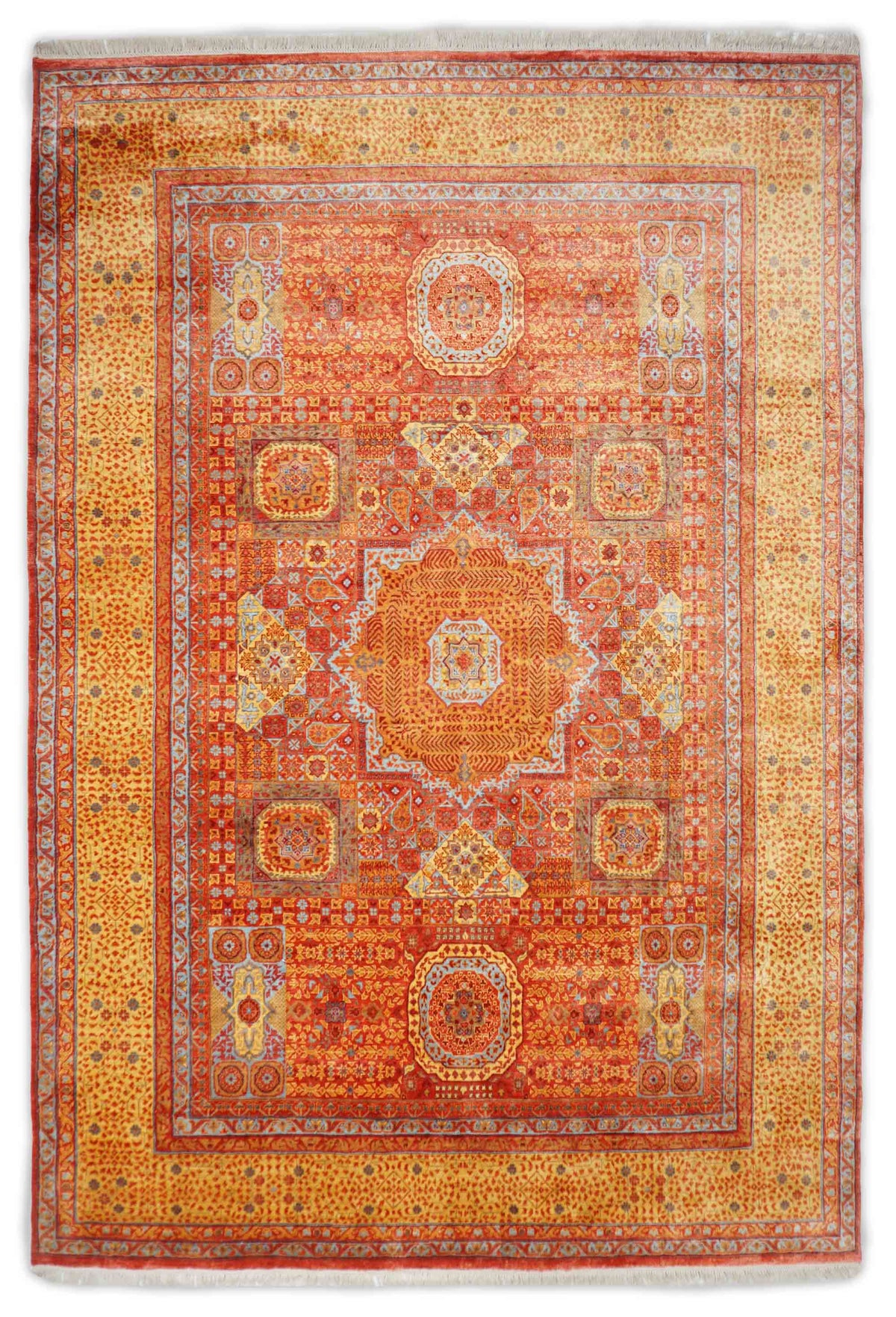

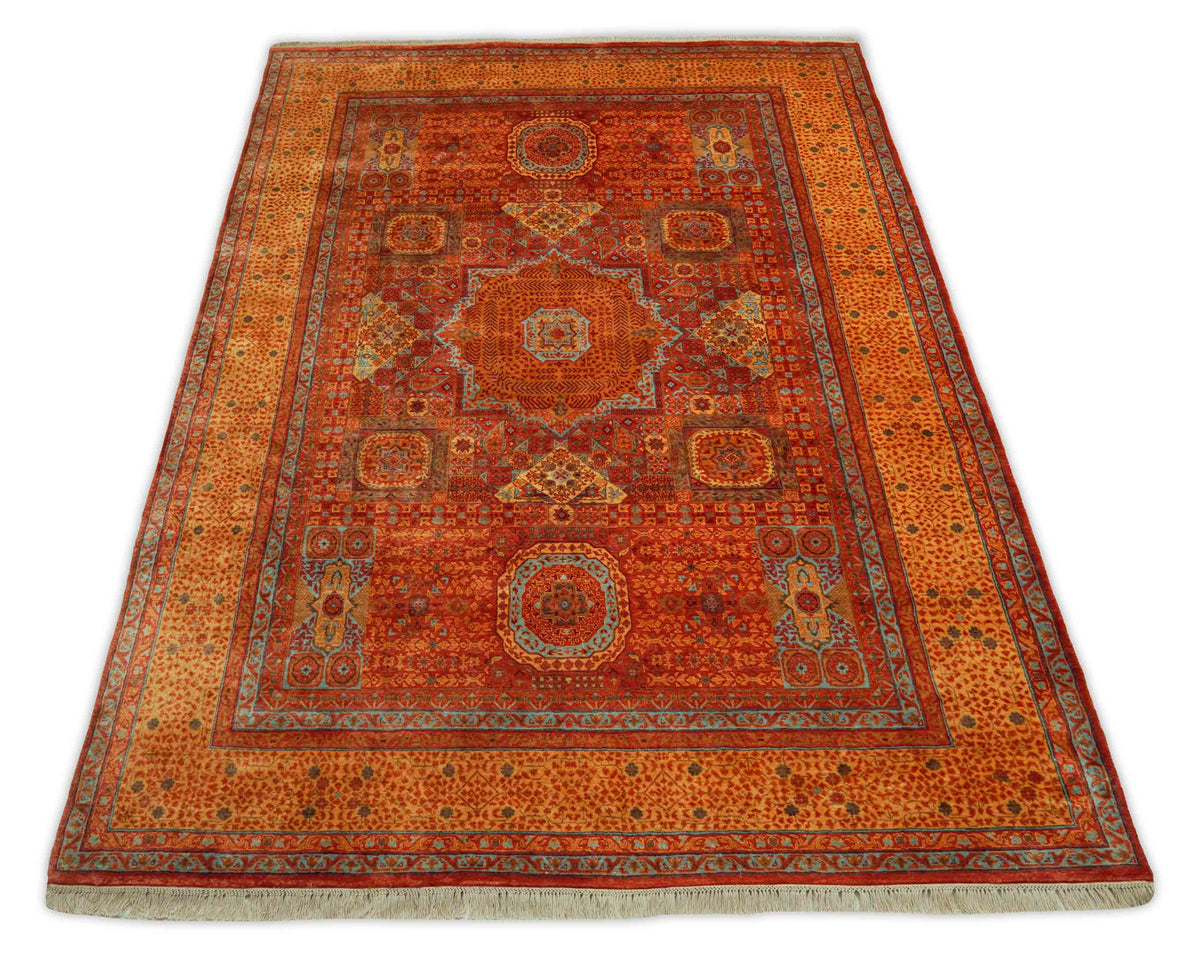
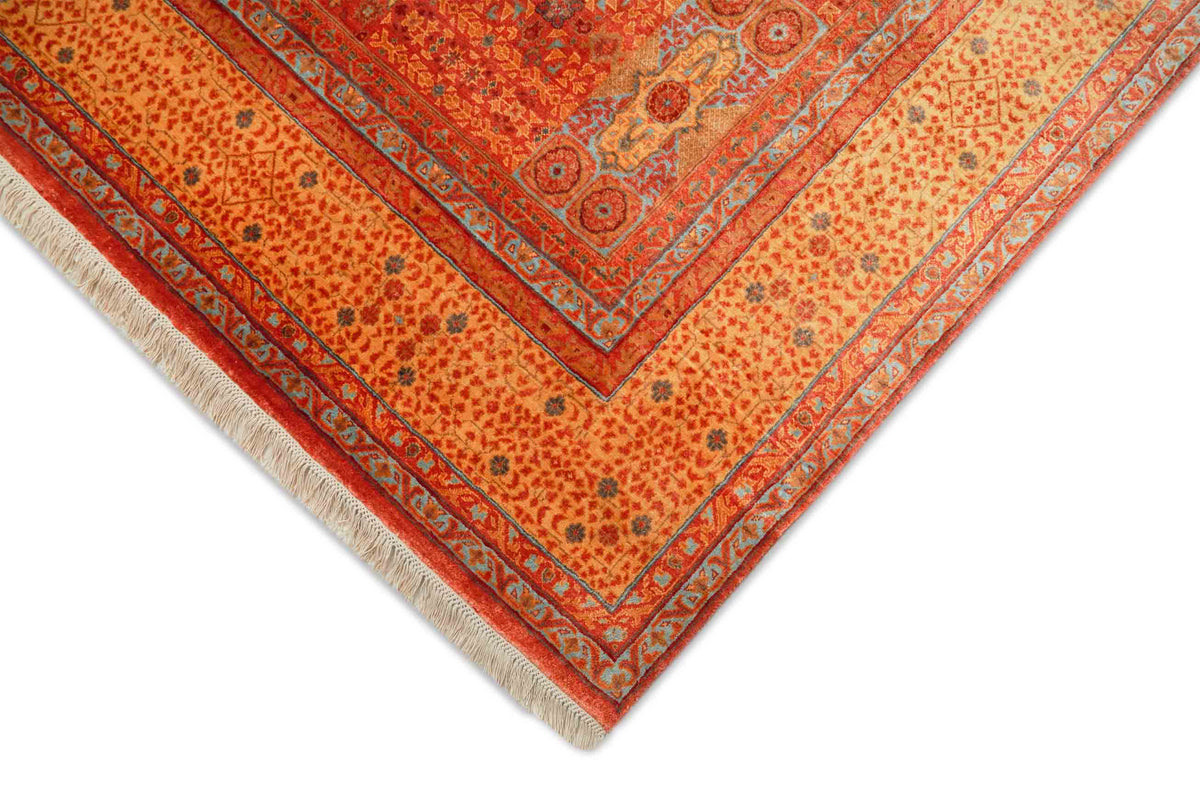
Mamlouk | 340 x 232 cm | Nr. Z-1178


|
1-3 working days delivery time (within Germany) |

|
14-day home trial |

|
Free delivery & returns within the EU |
Mamlouk
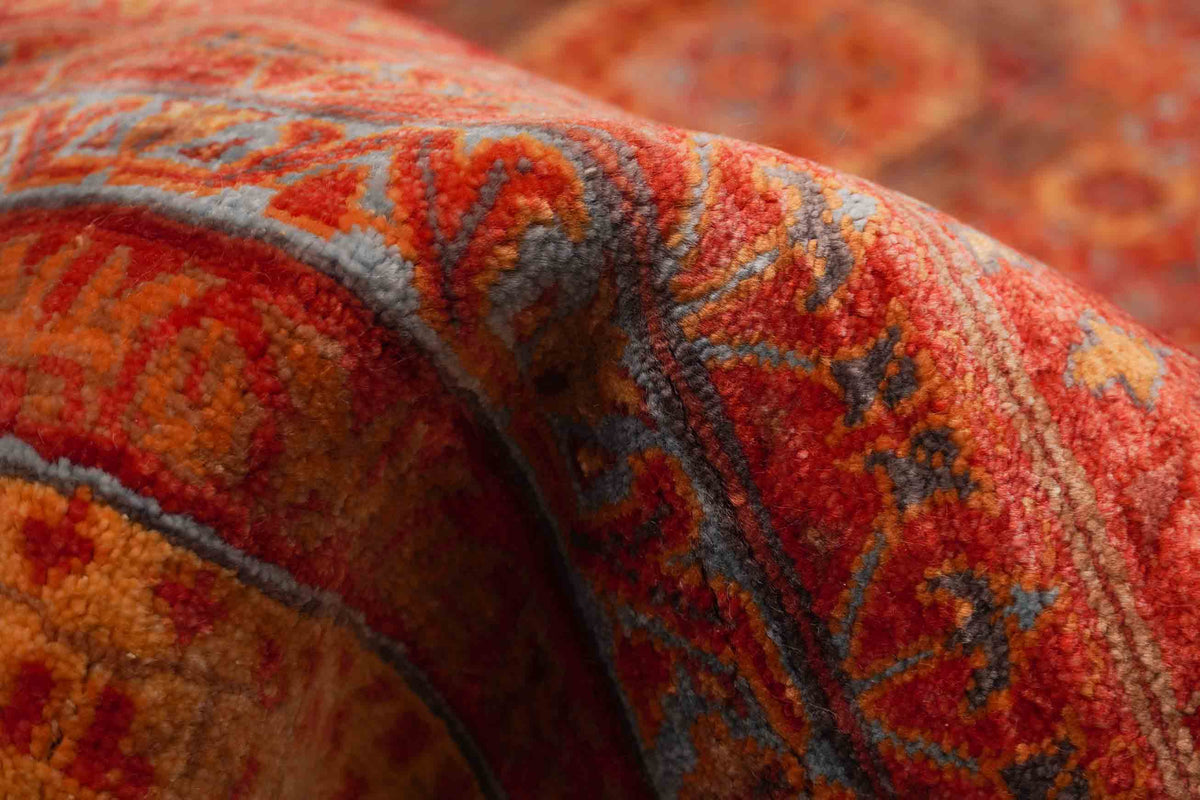
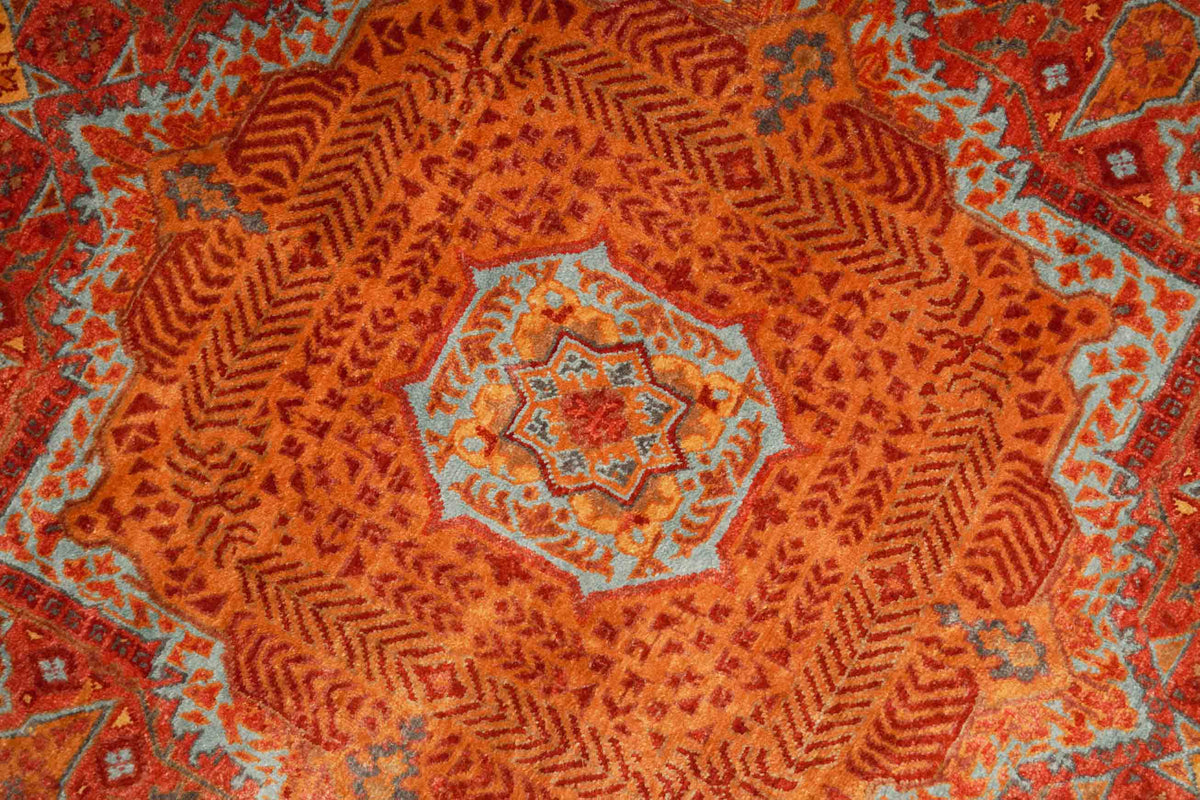
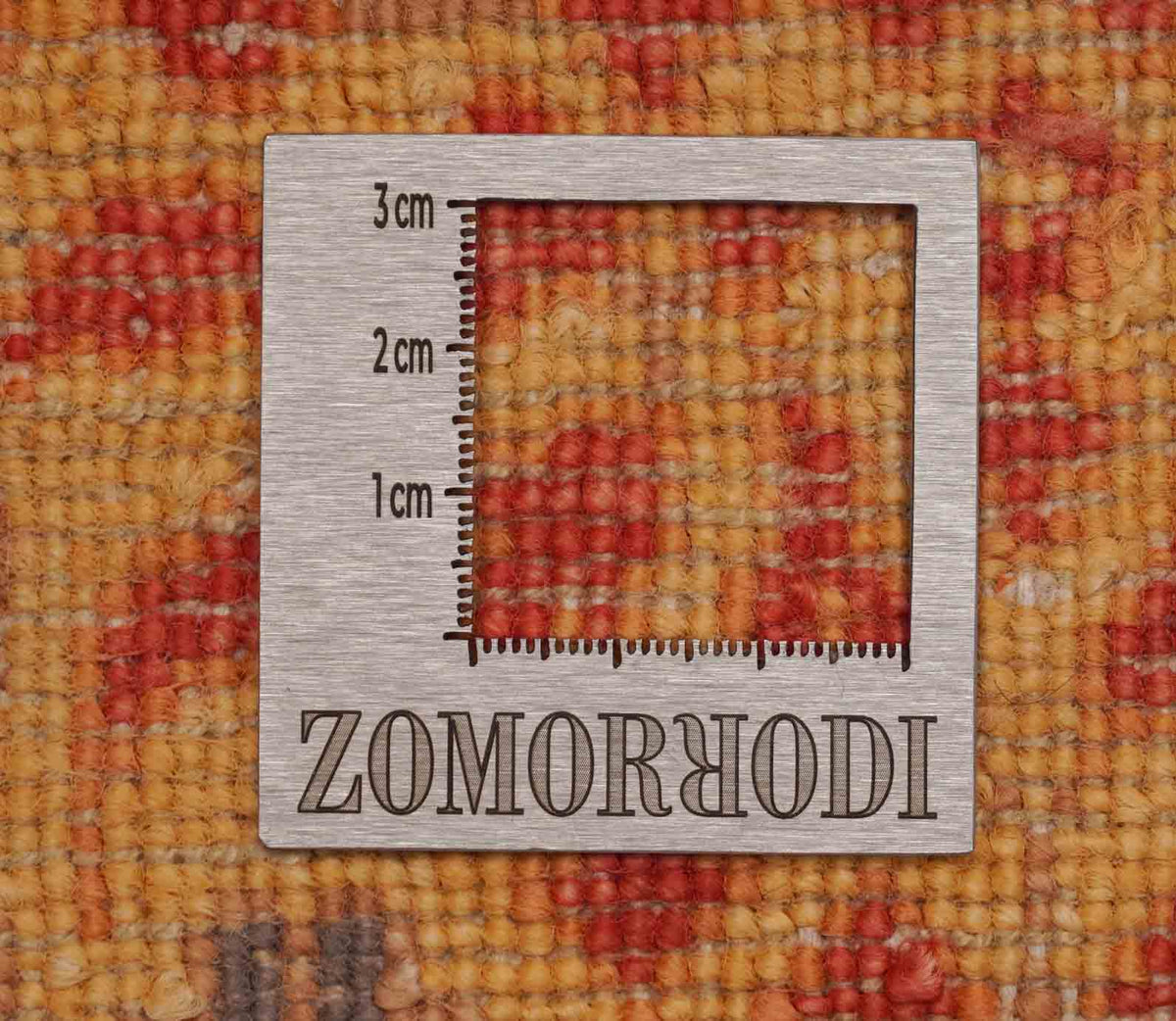
This rug in orange combines traditional craftsmanship with timeless elegance. At approx. 250,000 knots per m² the workmanship is correspondingly elaborate, recognisable in the precise drawing and the finely worked details. Its 340 × 232 cm make it a large living room rug. It shows to equally good effect in the dining room under a table for six to eight people. This one-of-a-kind piece brings individual character into the room and keeps its value far beyond short-lived trends.
| Availability | In stock | Delivery time: 1–3 working days |
| Origin | India |
| Dimensions | 340 cm x 232 cm (= 7.89 m²) |
| Construction | hand-knotted |
| Material |
Pile: wool & viscose Weft & Warp: cotton |
| knots | 250,000 knots |
| Pile height | 10 mm |
| Colour | Orange |
| Edition | one-of-a-kind piece |
Origin
Mamlouk rugs (occasionally spelled Mamluk) were knotted in Egypt above all in the 15th century and are found almost exclusively in museums today. This Mamlouk rug is a new take on the classic pattern, which is defined by a wealth of different geometric shapes that give the rug a kaleidoscopic effect.
Material
The pile of this Mamlouk is made from a hard-wearing blend of wool and viscose. Viscose (also known as acetate silk or rayon) is generally obtained from the natural product cellulose, in other words from the raw material wood. In India, the cellulose pulp is obtained from bamboo. In an elaborate process, the pulpy cellulose is drawn into a continuous textile yarn. This is why viscose is also called a continuous filament yarn. Because of the silky sheen of the yarn, viscose obtained from bamboo is also known as "Bamboo Silk". The colloquial term "artificial silk" is not permitted under the German Textile Labelling Act (TKG).The weft and warp threads of this Mamlouk are made of cotton. This versatile material is tear-resistant and supple, which makes it particularly well suited to a hard-wearing foundation.
A note on the photos
Child labour? No thanks.

The rug trade against child labour: Children belong in school, not at a knotting or weaving loom. For us it therefore goes without saying that we only offer rugs made under fair conditions and without child labour. We place particular importance on good working conditions and tolerate no child labour at our producers.
We are proud to be a member of the Care & Fair campaign against child labour.
The industry-wide campaign CARE & FAIR - the rug trade against child labour was founded in 1994. The initiative has made it its mission to fight the excesses of illegal child labour in the knotting countries and, at the same time, to improve the overall situation of rug knotters and their families in the knotting regions of India, Nepal and Pakistan.
Our goals:
- Ending illegal child labour in India and Pakistan.
- Creating better living conditions for knotters' families.
- Socially responsible production. We only accept goods that have been made under fair conditions. Working with our producers as partners, we want to make clear to them that taking on social responsibility benefits everyone.
Together with Care & Fair we currently support 10 schools, 6 adult education centres and 3 day clinics in India and Pakistan.
Choose options
|
|
1-3 working days delivery time (within Germany) |
|
|
14-day home trial |
|
|
Free delivery & returns within the EU |